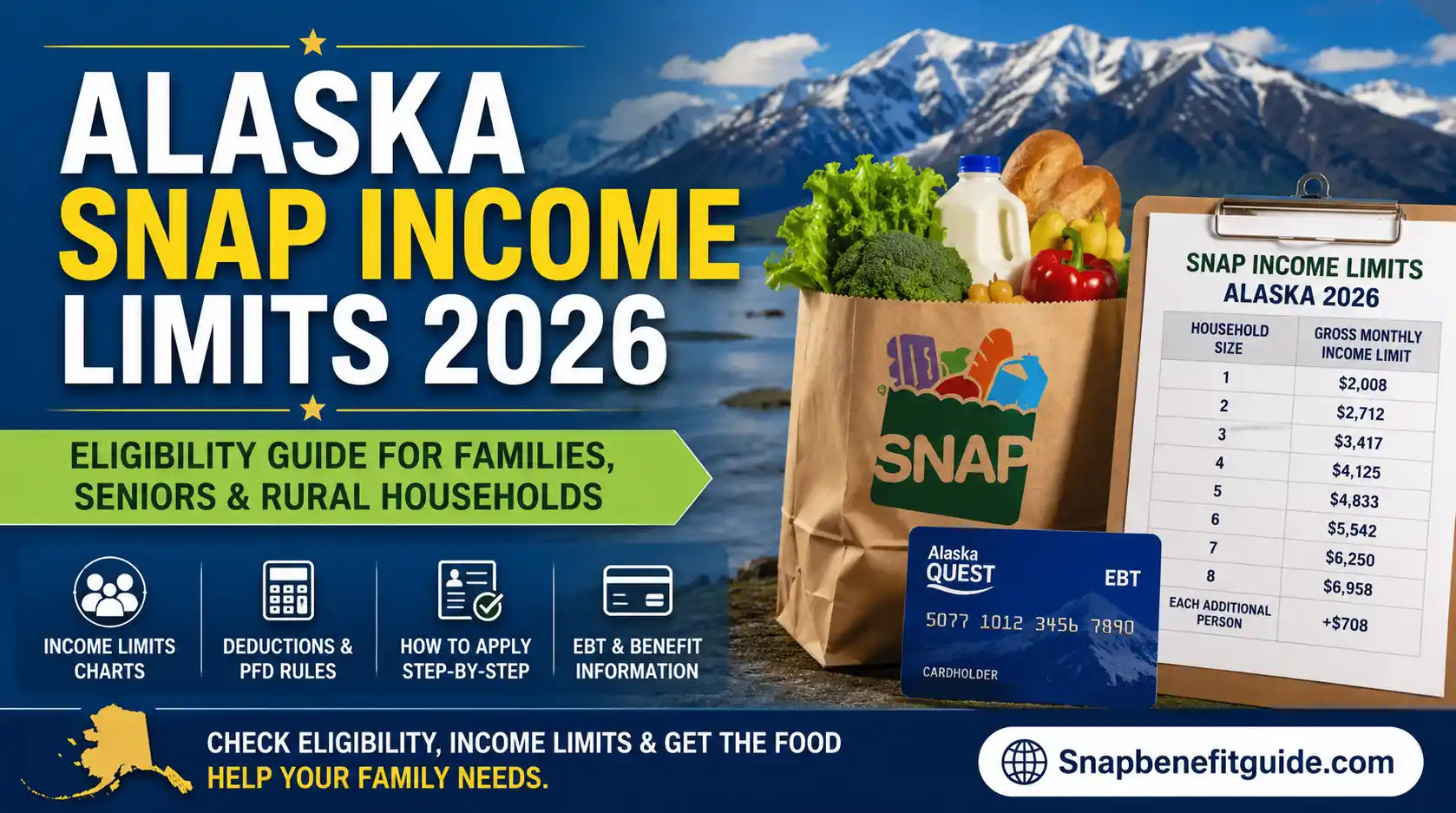
If you are living in Alaska and want to know your Food Stamps eligibility criteria, the first thing you need to see is the Alaska SNAP income limits.
The Supplemental Nutrition Assistance Program (SNAP) helps low budget households, seniors, disabled persons, and working families buy foods every month using an Alaska Quest Card.
Alaska has different Food Stamps rules compared to many U.S. states. Because grocery prices, transport expenses, and living costs are very high, Alaska uses higher income limits.
What Are Alaska SNAP Income Limits?
SNAP income limits in Alaska are the maximum monthly income your family can earn to qualify for food stamps.
There are two main income tests:
Gross Income
This is your total monthly income before taxes or deductions.
Examples:
- Wages
- Self-employment income
- Unemployment
- Social Security
- Child support received
Net Income
This is the amount left after allowed deductions. This is often the most important number.
Many households qualify because deductions lower their countable income. The USDA Food and Nutrition Service uses both gross and net income to decide eligibility.
Why Alaska SNAP Limits Are Higher
Alaska is different from the lower 48 states. The cost of groceries and healthy fooda in famous places like Anchorage or Fairbanks is to much high. But in remote villages, expenses can be even worse.
Reasons include:
- Shipping costs
- Weather delays
- Limited grocery stores
- Higher fuel prices
- Remote access by plane or boat
This is why Alaska statewide SNAP income limits are adjusted.
Alaska SNAP Gross Income Limits 2026
Here is the Alaska SNAP gross monthly income chart.
| Household Size | Monthly Gross Income Limit |
| 1 | $2,008 |
| 2 | $2,712 |
| 3 | $3,417 |
| 4 | $4,125 |
| 5 | $4,833 |
| 6 | $5,542 |
| 7 | $6,250 |
| 8 | $6,958 |
| Each extra person | +$708 |
Example
If you are a family of 4 earning $4,000 per month, you may pass the gross income test.
Alaska SNAP Net Income Limits 2026
Net income matters after deductions.
| Household Size | Net Monthly Income Limit |
| 1 | $1,255 |
| 2 | $1,704 |
| 3 | $2,152 |
| 4 | $2,600 |
| 5 | $3,049 |
| 6 | $3,497 |
| 7 | $3,945 |
| 8 | $4,394 |
If your net income is below these limits, you may qualify.
Useful Guide: Compare SNAP Income Limits with all 50 states
How to Know If You Qualify for Alaska SNAP
Use this simple process:
Step 1: Count your household
A household usually means people who buy and cook food together.
This may include:
- Spouse
- Children
- Parents
- Relatives
Household size mistakes are one of the biggest reasons for delays.
Step 2: Add all income
Include:
- Job income
- Side work
- Benefits
- Child support
Step 3: Subtract deductions
This lowers your countable income.
Step 4: Compare with SNAP limits
Check both gross and net.
Step 5: Apply
Submit your application through the Alaska Department of Health.
Important Alaska SNAP Deductions
Deductions can make a big difference.
| Deduction | Who Can Use It |
| Standard deduction | Everyone |
| Shelter deduction | Renters/homeowners |
| Utility allowance | Households paying utilities |
| Dependent care deduction | Parents working or studying |
| Medical deduction | Seniors and disabled |
| Child support deduction | Those paying support |
Example
Income: $3,200
- Rent: $1,100
- Utilities: $350
- Childcare: $400
New net income:
$3,200 – $1,850 = $1,350
That could help you qualify.
Does Alaska Count Permanent Fund Dividend (PFD)?
This is one of the most common questions.
Yes, in many cases, Alaska’s Permanent Fund Dividend (PFD) may count as monthly income.
But timing matters. If you receive your PFD during the SNAP certification period, it may affect eligibility.
Important:
- Report your PFD
- Ask your caseworker how it will be counted
- Keep payment records
Many applicants forget this.
Special SNAP Rules for Rural Alaska and Villages
This is where Alaska is unique. People living in Alaska Native villages and remote communities may have extra challenges:
- Higher grocery prices
- Fewer stores
- Delayed shipments
- Limited transportation
In some areas, subsistence hunting and fishing play a major role in food access.
The Division of Public Assistance may review these factors differently.
This is important for:
- Western Alaska villages
- Arctic communities
- Island communities
Can Seniors Get Alaska SNAP?
Yes. People aged 60+ often have easier rules.
Benefits include:
- Medical expense deductions
- Lower countable income
- Easier recertification
This makes Alaska SNAP income limits for seniors more flexible.
Read Also: View current SNAP Payment Schedule for 2026
Alaska SNAP for Disabled Individuals
Disabled applicants may qualify with:
- Medical deductions
- Disability income adjustments
- Higher shelter deductions
Documents may include:
- Disability proof
- Medical bills
- Prescription records
Can College Students Get SNAP in Alaska?
Yes, but only in certain situations. You may qualify if:
- You work enough hours
- You have children
- You receive work-study
- You meet exemption rules
Student eligibility can be confusing. Always ask before applying.
What About Work Requirements in 2026?
Some adults without dependents must meet work requirements.
This usually includes:
- Working
- Job training
- Volunteering
Failure to meet work rules can limit benefits. But exemptions exist for:
- Seniors
- Disabled individuals
- Pregnant women
- Some rural residents
What Is Expedited SNAP in Alaska?
Expedited SNAP gives benefits faster. Some households can receive help within 7 days.
This usually happens when:
- Income is very low
- Housing costs are high
- Cash on hand is limited
This can be important during emergencies.
How to Apply for Alaska SNAP
Online
Apply through the Alaska benefits portal.
In Person
Visit your nearest Alaska DPA office.
Common statewide searches:
- Alaska SNAP office near me
- Alaska food assistance near me
By Mail or Fax
Helpful for rural households with internet issues.
Documents You Need
Prepare:
- Photo ID
- Social Security numbers
- Pay stubs
- Rent receipts
- Utility bills
- Bank statements
- Childcare proof
Missing documents can delay approval.
How Long Does It Take?
- Standard processing: Up to 30 days.
- Expedited: Up to 7 days.
Delays may happen because of:
- Missing interviews
- Wrong paperwork
- Rural mailing delays
Why Alaska SNAP Applications Get Denied
Common reasons:
- Income too high
- Missing documents
- Household size errors
- Unreported PFD
- Missed interview
Avoid these mistakes.
What If You Are Denied?
You have appeal rights.
If denied:
- Read your denial notice
- Request a hearing
- Submit missing proof
- Explain errors
Appeals can reverse decisions.
How Recertification Works
SNAP is not permanent. You must recertify. This means updating:
- Income
- Household size
- Expenses
- Employment
Missing recertification deadlines can stop benefits.
Other Food Assistance Options in Alaska
If you do not qualify for SNAP:
Try these programs:
- Women, Infants, and Children (WIC)
- Temporary Assistance for Needy people
- Food Bank of Alaska
- School meal programs
These can help fill food gaps.
Official Resources
For accurate and updated Alaska SNAP information, use these official resources:
These official sources provide details, eligibility changes, and registration instructions.
FAQs (Alaska Food Stamps Income Limits)
What is the Alaska SNAP income limit for a family of 4?
The gross monthly income limit is about $4,125, but deductions can lower your monthly net income.
Is Alaska SNAP based on gross or net income?
Both are used. Your gross income is checked first, then monthly net income after required deductions.
Does Alaska have higher SNAP limits than other states?
Yes. Alaska limits has high because groceries and living expenses are very high.
Can I get SNAP in Alaska if I work?
Yes. Many working households qualify.
Does Alaska count PFD for SNAP?
Yes, in many cases it does.
How fast can I get SNAP in Alaska?
Regular cases take up to 30 days. Expedited cases may take 7 days.
Can seniors qualify easier?
Yes. Seniors often receive medical deductions and simplified rules.
Can rural Alaska residents apply by mail?
Yes. Mail and fax options are available for remote communities.
Related Guide: Use our free SNAP Eligibility Calculator to estimate your benefits
Conclusion
Food Stamps income limits in Alaska are very high than other 48 states, but eligibility depends on more than just your monthly income.
If you are living in urban Alaska or in a remote village, understanding these new rules can help you avoid delays and maximize your Food Assistance.
Before applying:
- Count your household carefully
- Report all income
- Include every deduction
- Keep your PFD records
- Submit complete documents
Even if you think you may not qualify, it is still worth applying. Many Alaska families are approved after deductions are counted.
References
- Alaska Department of Health – SNAP (Food Stamps) Program
- USDA Food and Nutrition Service – SNAP Eligibility Rules
- Alaska Division of Public Assistance Official Portal
- Food Bank of Alaska

Sohail Asghar is a U.S. benefits researcher with over 2 years of dedicated experience studying EBT, SNAP, and Medicaid programs. He has helped thousands of readers understand their eligibility, payment schedules, and benefit rights through in-depth research and analysis of official government sources. His work focuses on making complex government benefit information simple and accessible for everyday Americans.