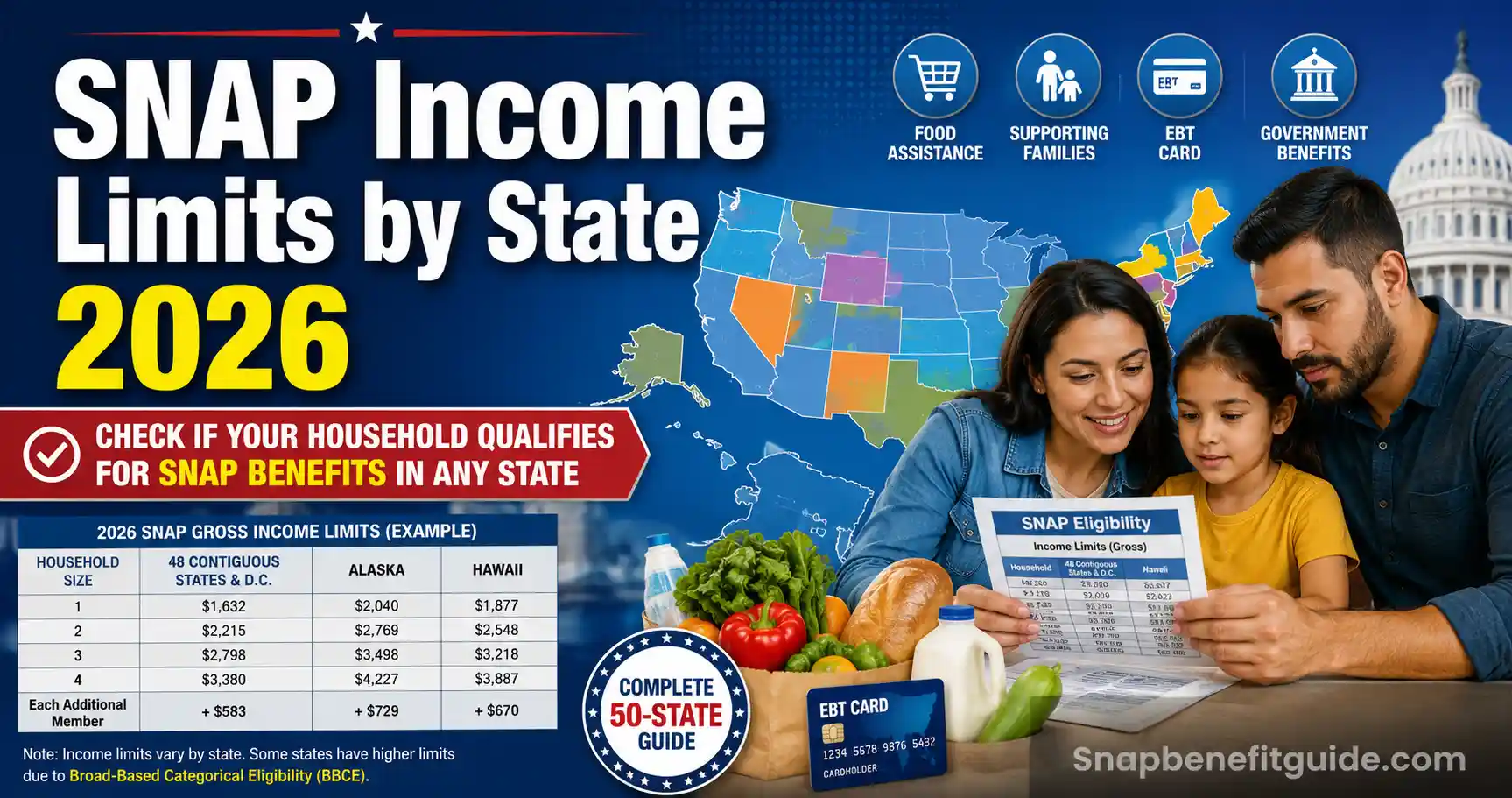
If you are wondering whether you eligible for food benefits, understanding SNAP income limits for all 50 States is the first step. Also use our Free SNAP Eligibility Calculator by State to estimate your benefits
SNAP (Supplemental Nutrition Assistance Program), formerly known as Food Stamps, supports low budgte families to purchase food items using an EBT card. While SNAP is a federal initiative controlled by the USDA Food and Nutrition Service (FNS), states can apply different eligibility rules that affect who eligible.
The main reason people get worried is that SNAP eligibility is not depend only on income. Family size, deductions, housing costs, utility expenses, age, disability status, and state specific policy can all affect on SNAP requirements.
What Are SNAP Income Limits?
SNAP income limits are the maximum minthly income levels a family can have and still eligible for food stamps.
Most states use federal rules depends on the Federal Poverty guidelines. However, some states use Broad Based Categorical Eligibility (BBCE), which may allow higher income limits.
SNAP Eligibility Is Usually Based On:
- Household size
- Gross income
- Net income
- Housing costs
- Utility expenses
- Childcare expenses
- Medical expenses
- Disability status
SNAP Income Chart by Household Size
Most states start with federal SNAP income standards before applying state-specific rules.
| Household Size | General Income Limit Trend |
| 1 Person | Lowest limit |
| 2 People | Higher limit |
| 3 People | Increased limit |
| 4 People | Higher eligibility threshold |
| 5 People | Additional allowance |
| 6 People | Additional allowance |
| 7 People | Additional allowance |
| 8+ People | Additional amount per person |
What Is the SNAP Income Limit for a Family of 4?
A family of 4 typically eligible under higher income thresholds than smaller families. Exact limits vary based on deductions and state food stamps eligibility rules.
Gross Income vs Net Income
Many applicants think they earn too much because they only look at gross income.
Gross Income
This is income before deductions.
Examples:
- Wages
- Salary
- Self-employment income
- Unemployment benefits
- Some Social Security payments
Net Income
This is income after approved deductions.
Examples include:
- Shelter deductions
- Utility allowance
- Childcare expenses
- Medical expenses for eligible households
Many families who fail the gross income test may still qualify after deductions are applied.
Also see New Food Stamp Requirements 2027
How SNAP Eligibility Is Calculated
Most states follow this process:
Step 1: Determine Household Size
Count people who buy and prepare food together.
Step 2: Calculate Gross Income
Add all qualifying household income.
Step 3: Apply Deductions
Subtract approved expenses.
Step 4: Calculate Net Income
Determine countable income.
Step 5: Compare With State Rules
Check state-specific SNAP eligibility requirements.
SNAP Income Limits by State 2026
The table below shows all states short details where residents can apply for SNAP benefits. Most states follow federal guidelines, while some use expanded eligibility rules through BBCE. Click on the State name to get more detail:
States With Expanded SNAP Eligibility
Some states have adopted Broad-Based Categorical Eligibility (BBCE).
Examples Include
- California
- Oregon
- Washington
- New York
- Massachusetts
- Pennsylvania
- Colorado
- New Jersey
These states may allow higher gross income thresholds and simplified asset rules.
What Is BBCE in SNAP?
BBCE stands for Broad-Based Categorical Eligibility.
It allows states to expand access to SNAP beyond standard federal limits.
Benefits of BBCE
- Higher income limits
- Fewer asset restrictions
- Easier application process
- More working families qualify
Potential Drawbacks
- Rules vary by state
- Not all households qualify automatically
- Benefit amounts may still differ
States With Higher SNAP Income Flexibility
Many applicants ask:
Which State Has the Highest SNAP Income Limit?
There is no single respnose because eligibility based on family size, deductions, and state rules.
However, states often considered more flexible include:
- California
- Oregon
- Washington
- Massachusetts
- New York
- Colorado
These states generally use broader eligibility pathways.
SNAP Income Limits for Seniors
Older adults may qualify under special rules.
Seniors May Receive
- Medical expense deductions
- Modified resource rules
- Additional eligibility considerations
Many seniors who think they earn too much may still qualify after deductions are applied.
SNAP Income Limits for Disabled Adults
Households with disabled members may receive additional deductions.
Programs often connected to eligibility include:
- SSI
- SSDI
- Medicaid
- Housing Assistance
Disability related expenses can reduce countable income and improve SNAP eligibility.
Can I Get SNAP If I Work Full Time?
Yes. Many working families qualify for SNAP benefits.
The program is designed to support households whose income is not enough to cover basic food expenses.
Even if you work full time, you may still qualify if:
- Rent is high
- Childcare costs are significant
- Medical expenses are substantial
- Household size is larger
What Income Is Too High for Food Stamps?
There is no single nationwide answer.
Factors that affect eligibility include:
- State rules
- Household size
- Net income
- Gross income
- Deductions
If you’re close to the limit, it is usually worth applying because deductions can make a big difference.
SNAP Asset Limits and Resource Tests
Some states still consider assets during eligibility reviews.
Examples of countable resources may include:
- Cash savings
- Certain bank accounts
- Investment accounts
Many BBCE states have reduced or removed traditional asset tests.
Related Programs That May Help
If you do not qualify for SNAP, you may still qualify for:
- WIC
- Medicaid
- LIHEAP
- TANF
- School Meal Programs
- Housing Assistance
How to Check SNAP Eligibility in Your State
You can verify eligibility by:
- Using your state’s SNAP eligibility calculator
- Contacting your local SNAP office
- Applying online through your state agency
- Reviewing USDA SNAP guidelines
Before applying, gather:
- Identification
- Income records
- Utility bills
- Housing information
- Expense documentation
FAQs (Food Stamps Income Limits)
What are SNAP income limits by state?
Many states follow federal SNAP requirments, but some use expanded eligibility guidelines that allow higher income thresholds.
Do SNAP income limits differ by state?
Yes. States can apply different policies through BBCE, deductions, and resource rules.
What is the SNAP income limit for a family of 4?
The SNAP monthly income restrictions depends on state rules, deductions, and family circumstances. Larger householfs generally eligible under higher thresholds.
Can I get SNAP if I make too much money?
Possibly. Mostly applicants eligible after housing, utility, childcare, and medical deductions are considered.
Does SNAP count Social Security income?
Yes. Certain Social Security benefits may be counted when determining SNAP eligibility.
Which states have expanded SNAP eligibility?
States such as California, Massachusetts, Oregon, New York, Washington and Pennsylvania are commonly known for broader eligibility pathways.
Do seniors have different SNAP income limits?
60 plus aged people may qualify for additional deductions that reduce countable income and improve eligibility.
What is BBCE in SNAP?
Broad Based Categorical Eligibility is a state option that can expand Food Stamps access by increasing monthly income limits and reducing asset restrictions.
Conclusion
By knowing Food Stamps income limits for all 50 states is important because Food Stamps eligibility is depends on more than just your paycheck. Family members count, deductions, housing costs, utility expenses, age, disability rules, and state specific policy can all affect whether you eligible. SNAP Payment Dates — Find When Your EBT Deposits
If you’re unsure about your eligibility, don’t assume your income is too high. Many households qualify after deductions are applied. The best approach is to check your state’s SNAP eligibility calculator, gather your documents, and submit an application to see what benefits may be available.