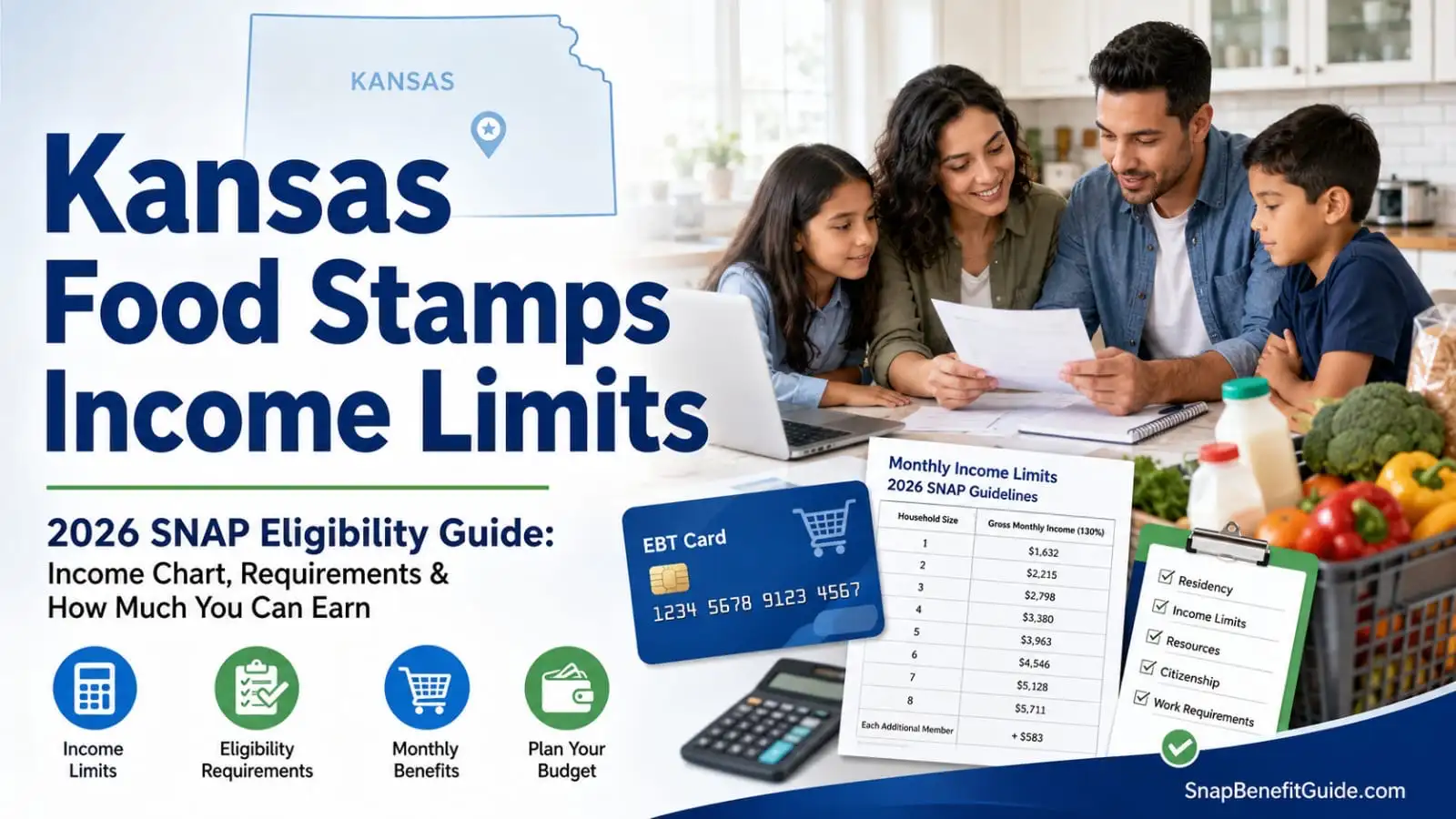
Many Kansas households search for “Kansas food stamps income limits” because they want a straight answer — do I qualify or not? The rules aren’t as complicated as they look once you know how the limits actually work.
In Kansas, SNAP is officially called the Food Assistance Program, managed by the Kansas Department for Children and Families (DCF). Eligible families get monthly benefits deposit into an Electronic Benefits Transfer card — also called the Kansas Benefits Card.
Income is the biggest factor in eligibility. But it’s not the only one. Family size, allowable deductions, assets, and certain special circumstances like age or disability all feed into the final decision.
Quick Answer: What Is the Income Limit for Food Stamps in Kansas?
Most families have to clear two thresholds: a gross income test and a net income test. Gross income — what you earn before any deductions — generally can’t exceed 130% of the federal poverty level. Net income, calculated after approved deductions, must fall below a lower limit. Both limits shift depends on how many members are in your family.
Kansas SNAP Income Limits 2026
The figures below reflect the SNAP benefits Program standards for October 2025 through September 2026. These update annually, so the numbers here are current for this benefit year.
Kansas Food Stamps Gross and Net Income Limits
| Household Size | Gross Monthly Income Limit | Net Monthly Income Limit |
|---|---|---|
| 1 person | $1,696 | $1,305 |
| 2 people | $2,292 | $1,763 |
| 3 people | $2,888 | $2,221 |
| 4 people | $3,483 | $2,680 |
| 5 people | $4,079 | $3,138 |
| 6 people | $4,675 | $3,596 |
| 7 people | $5,271 | $4,054 |
| 8 people | $5,867 | $4,512 |
Households larger than eight people get additional allowances for each extra member.
Also See Every State’s SNAP Income Limit in One Place — 2026 SNAP Income Limits by State
Gross Income vs Net Income: What Is the Difference?
Here’s the thing most people miss: Kansas doesn’t just look at your paycheck. There are two separate calculations, and passing both is what matters.
Gross Income
Your total monthly income before taxes or deductions. That includes wages, self-employment earnings, Social Security, SSI, child support, retirement income, and unemployment benefits. All of it goes into the gross calculation.
Net Income
What’s left after approved SNAP deductions are subtracted. Those deductions can include:
- Standard household deduction
- Earned income deduction (a set percentage of wages)
- Child care costs paid for work, training, or school
- Certain medical expenses for elderly or disabled household members
- Approved shelter costs — rent, mortgage, utilities
A family that looks over the income limit on paper often qualifies once deductions are factored in. Don’t rule yourself out before running the full calculation.
Kansas Food Stamp Eligibility by Household Size
Household size determines which row of the income table applies to you — and Kansas DCF defines “household” more specifically than just people sharing an address.
A household generally includes people who live together, buy food together, and prepare meals together. A single adult living alone applies as a one-person household. A married couple with kids in the same home applies together. Where it gets more nuanced is with adult children, roommates, or multi-generational living situations — DCF evaluates those case by case.
What Income Counts for Kansas SNAP?
Earned Income
Wages from full-time or part-time work, temporary employment, and self-employment income all count. Even irregular or seasonal work needs to be reported.
Unearned Income
Social Security, SSI, retirement payments, child support received, and unemployment benefits all fall into this category. Most regular income sources count — Kansas DCF is thorough about this.
Small or infrequent income sources still need to be disclosed during the application. When in doubt, report it.
Find Out If You Qualify in Minutes — Free SNAP Eligibility Calculator by State
SNAP Deductions That Can Help You Qualify
A lot of applicants give up too early because their gross income looks too high. Deductions exist specifically to account for real-world costs that affect what a household can actually spend on food.
Earned Income Deduction
A standard percentage of earned wages is excluded from the net income calculation automatically.
Housing and Utility Costs
Rent or mortgage payments above a certain threshold, plus utility costs, may qualify as a shelter deduction.
Child Care Expenses
Money paid for childcare while you work, attend school, or complete job training can reduce countable income.
Medical Expenses
Households with elderly or disabled members get additional deductions for out-of-pocket medical costs exceeding a set monthly threshold.
These aren’t obscure loopholes — they’re built into SNAP specifically to make benefits accessible to households with real financial obligations.
Kansas SNAP Asset and Resource Limits
Beyond income, Kansas reviews certain assets for some households.
Countable resources can include bank accounts, cash savings, and some financial assets. Excluded from the count: your primary home, most vehicles, and income-producing property. Households with elderly or disabled members operate under separate, more flexible resource rules.
Special SNAP Rules for Elderly and Disabled Households
If anyone in your household is 60 or older, or has a qualifying disability, different rules apply. These households can access additional medical deductions, more lenient income calculations, and adjusted resource limits.
Kansas DCF recognizes specific provisions for elderly, disabled, and veteran households. If this applies to you, it’s worth flagging during the application.
Also Check When Your Benefits Hit — 2026 SNAP Payment Dates by State
Kansas SNAP Income Limits by City
The income standards are the same across all of Kansas — Wichita, Topeka, Lawrence, Overland Park, Kansas City, Olathe, Manhattan, and every rural county all use the same chart. Your zip code doesn’t affect the limits.
What does vary is local support. Urban areas like Kansas City and Overland Park tend to have more Food Stamps outreach programs, food banks, and community organizations that can help with the registration process. Rural Kansas households often rely on local food pantries and farmers market programs to supplement benefits. The help available looks different depending on where you live, even if the eligibility math doesn’t.
How to Apply for Food Stamps in Kansas
Step 1: Check Eligibility
Look at your family size, monthly income, housing expenses, and any special circumstances before starting the application.
Step 2: Submit an Application
Applications go through Kansas DCF, either online, by phone, or in person at a local DCF office.
Step 3: Complete an Interview
Most applicants will need to complete a brief interview — this can often be done by phone.
Step 4: Provide Verification
Documents typically needed:
- Proof of income (pay stubs, award letters)
- Photo ID
- Proof of housing costs
- Utility bills
Step 5: Receive EBT Benefits
Once approved, benefits are loaded monthly onto your Kansas Benefits Card.
Common Mistakes When Applying for Kansas SNAP
Mistake 1: Assuming You Earn Too Much
Gross income alone doesn’t determine eligibility. Running the net income calculation with deductions is what actually matters.
Mistake 2: Not Reporting Expenses
Housing costs, childcare, and medical expenses can reduce your countable income — but only if you report them.
Mistake 3: Using Gross Income Only
SNAP runs both a gross and a net income test. Stopping at gross gives you an incomplete picture.
Mistake 4: Forgetting Household Rules
Who you buy and prepare food with matters, not just who shares your address.
Kansas SNAP Eligibility Decision Guide
You May Qualify If:
- Your income falls within household limits
- You meet household composition requirements
- You have the required documents ready
- You complete the full application process
You May Need Extra Review If:
- A household member is 60 or older
- Someone in the household has a disability
- You’re self-employed with variable income
- Your income fluctuates month to month
FAQs About Kansas Food Stamps Income Limits
What is the income limit for food stamps in Kansas?
It depends on household size. Most households must pass both the gross and net income tests — the table above breaks down the specific monthly limits for each household size.
How much can a family of four make and still get SNAP in Kansas?
For the 2025–2026 benefit year, a four-person household can have gross monthly income up to $3,483 and net income up to $2,680.
Does Kansas count Social Security income for food stamps?
Yes. Social Security is counted as unearned income in the SNAP calculation.
Can working families get food stamps in Kansas?
Absolutely. Having a job doesn’t disqualify you. Eligibility is based on household income after deductions, not employment status.
Do seniors qualify for Kansas SNAP?
Yes — and households with elderly members may actually qualify under more favorable rules, including higher deductions for medical expenses.
What expenses can reduce SNAP income in Kansas?
Earned income deductions, childcare costs, qualifying medical expenses, and shelter costs above a set threshold can all reduce your net income.
How often do Kansas SNAP income limits change?
Annually. The federal poverty guidelines are updated each year, and SNAP income limits adjust accordingly.
Conclusion
SNAP eligibility in Kansas isn’t just about what you earn — it’s about the full picture. Household size, deductions, expenses, and special circumstances all shape the final number. Plenty of households that initially think they earn too much actually qualify once the net income calculation is done correctly.
If you’re on the fence, apply. The Kansas Department for Children and Families makes the official determination — not a rough estimate on your end.
Official Resources
- Apply for Kansas Food Assistance Now — Kansas DCF Self-Service Portal
- Verify Current SNAP Income Eligibility Standards — USDA Food and Nutrition Administration
- Check Kansas Food Assistance Program Details — Kansas DCF
- Find a Kansas DCF Service Center Near You — Kansas DCF
Disclaimer: Food Stamps income limits in Kansas, allowable deductions, and EBT eligibility policy can change over time. Always confirm the current requirements with the Kansas Department for Children and Families (DCF) before registration or making decisions based on eligibility information.

Sohail Asghar is a U.S. benefits researcher with over 2 years of dedicated experience studying EBT, SNAP, and Medicaid programs. He has helped thousands of readers understand their eligibility, payment schedules, and benefit rights through in-depth research and analysis of official government sources. His work focuses on making complex government benefit information simple and accessible for everyday Americans.